
Expanding Trees and Forest-Based Livelihood Opportunities Through Mahatma Gandhi NREGA: An Exploration
The study explores how existing tree and forest-based livelihood schemes under Mahatma Gandhi National Rural Employment Guarantee Act can support the Indo-German project Enhancing Rural Resilience Through Appropriate Development Actions (ERADA), aimed at enhancing rural resilience. It maps current interventions from central and state governments, focusing on identifying scalable and replicable models rather than introducing new ones. It is part of a five-part series on livelihoods in non-farm, livestock, agriculture, aquaculture, and trees and forest sectors.

Social and Behaviour Change Strategy Department of Women & Child Development, Government of Madhya Pradesh Volume II: Guide for Implementation
This guide serves as a practical roadmap for implementing the Social and Behaviour Change (SBC) Strategy of the Department of Women and Child Development (DWCD), Government of Madhya Pradesh. Developed in collaboration with GIZ, the two-volume strategy aims to sustainably improve the health, nutrition, and empowerment of women and children by addressing behavioural and social determinants. Volume I outlines the policy and strategic framework, Volume II—Guide for Implementation—offers step-by-step guidance for districts to plan, execute, and monitor SBC interventions. It focuses on 19 priority behaviours, provides monthly thematic plans, ready-to-use formats, and clear guidance on communication, partnerships, and monitoring to ensure consistent, effective, and locally adaptable implementation across Madhya Pradesh.

Social and Behaviour Change Strategy Volume I: Policy & Strategic Approach
This document presents Madhya Pradesh’s comprehensive Social and Behaviour Change (SBC) Strategy, developed by the Department of Women and Child Development (DWCD) in collaboration with GIZ. It highlights the state’s commitment to improving the health, nutrition, and empowerment of women and children by addressing underlying social norms and behaviours. The strategy outlines priority behaviours, key messages, and interventions designed to foster lasting positive change, aligning with state and national policies and contributing to India’s progress toward the Sustainable Development Goals (SDGs) 2, 3, 4, and 5.

TOWARDS LAKSHYA: ZERO DUMPSITE- Collection of Case Studies
“Towards Lakshya Zero Dumpsite” is collection of case studies prepared by the Ministry of Housing and Urban Affairs with support of German Development Cooperation. This document illustrates experiences of twelve cities of varying size and geographies which have already undertaken dumpsite remediation and moved ahead in becoming Garbage free cities. This will serve as a guidance document for other cities in the country and help them learn, plan better and achieve the country's vision of SBM 2.0, making cities Garbage free.

German Sustainable Development Strategy
The German Sustainable Development Strategy (GSDS) 2021 Update outlines Germany's commitment to achieving the 2030 Agenda for Sustainable Development. The strategy emphasizes the Decade of Action (2020–2030) to accelerate efforts in key areas such as climate action, circular economy, housing, transport, food, and agriculture.

Guidebook: Implementing Solar Irrigation Sustainably
A guidebook for state policy-makers on maximizing the social and environmental benefits from solar pump schemes.
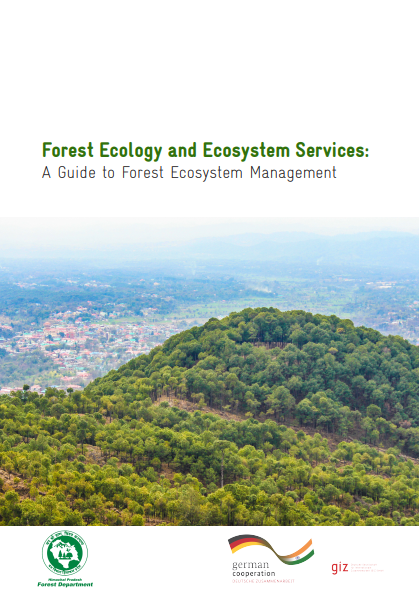
Forest Ecology and Ecosystem Services: A Guide to Forest Ecosystem Management
This manual provides information about the vital links between ecology and the benefits that we obtain from forests. The manual outlines basic management principles that we need to consider, whenever we want to manage the ecosystem services that are important to us.